Table of Contents
You’re packing for a weekend camping trip or preparing for potential power outages when you realize: most lanterns either cost a fortune, burn through disposable batteries, or provide inadequate lighting. The market is flooded with options promising versatility and reliability, but which ones actually deliver when you need them most?
Having tested numerous camping lights over the years, I’ve found that mid-priced lanterns often sacrifice either brightness, battery life, or durability. The Lepro LED Camping Lantern caught my attention with its claims of 7 lighting modes, USB-C rechargeability, and 20-hour runtime – all for under $20. But does it perform in real-world conditions, or is it just another generic product with impressive specs but disappointing execution?
After weeks of testing this lantern during camping trips, power outages, and everyday use, I’m sharing exactly what you can expect – including the trade-offs that spec sheets don’t mention and whether it’s worth your money compared to alternatives.
Key Takeaways
- Surprisingly versatile for its size – The 7 lighting modes (3 white, 4 colored) provide more flexibility than most lanterns in this price range
- Battery life meets claims in RGB mode but falls short on highest white light setting – expect 4-6 hours, not 10
- The compact design is both an advantage and limitation – highly portable but provides area lighting rather than bright task illumination
- Build quality exceeds expectations for $19 with decent materials and thoughtful features like the stable base and hanging hook
- Best suited for casual campers and emergency preparedness rather than serious backpackers or those needing intense brightness
Quick Verdict
Best for: Casual campers, budget-conscious families, emergency kit preparation, and situations where portability matters more than maximum brightness.
Not ideal for: Serious backpackers prioritizing minimal weight, survival situations requiring extreme durability, or users needing very bright task lighting.
Core strengths: Excellent value proposition, versatile lighting modes, compact and lightweight design, simple operation, reliable performance for its class.
Core weaknesses: Moderate maximum brightness, non-replaceable battery, plastic construction (though durable), limited runtime on highest white setting.
Product Overview & Specifications
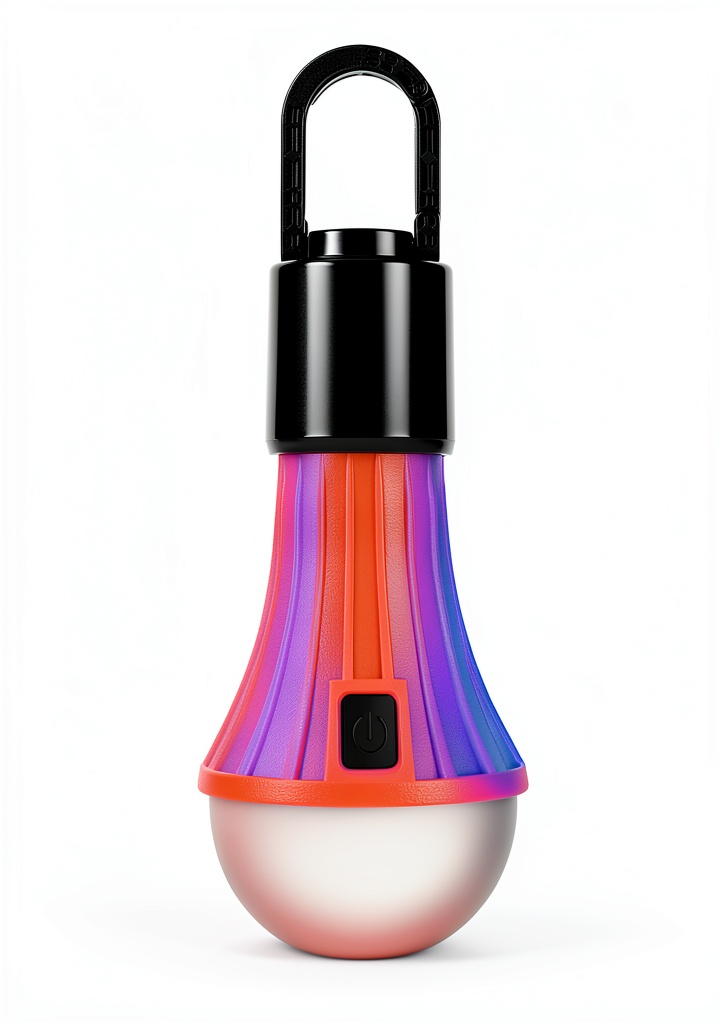
The Lepro LED Camping Lantern represents the sweet spot in today’s portable lighting market – balancing features, performance, and affordability. At just 5.29 ounces and measuring 5.51 x 2 x 2 inches, it’s genuinely pocketable while offering more functionality than basic emergency lights.
What sets this apart from traditional lanterns is its combination of practical white light options with mood-setting RGB modes. The three white settings provide graduated brightness levels suitable for different scenarios, while the four colored lights (red, green, blue, and color cycle) offer both functional and atmospheric lighting. The red mode specifically serves as a valuable feature for preserving night vision during camping.
| Specification | Details |
|---|---|
| Dimensions | 5.51 x 2 x 2 inches |
| Weight | 5.29 ounces |
| Battery | Built-in rechargeable lithium-ion |
| Charging | USB-C cable included |
| White Light Modes | 3 settings (low, medium, high) |
| RGB Modes | 4 settings (red, green, blue, color cycle) |
| Claimed Runtime | Up to 10 hours (white) / 20 hours (RGB) |
| Materials | Durable plastic construction |
| Special Features | Hanging hook, stable base, one-button control |
The control system deserves mention for its thoughtful simplicity – a single button handles all operations. Long-press toggles between white and RGB modes, while short presses cycle through individual settings within each mode. This eliminates the frustration of complex interfaces that plague many multi-function lanterns.
Real-World Performance & Feature Analysis
Design & Build Quality
Unboxing the Lepro lantern, my first impression was pleasantly surprised by its construction. For a sub-$20 product, it feels substantial without being heavy. The matte plastic exterior provides decent grip, and the overall design appears well-considered rather than hastily thrown together.
The folding handle is more robust than expected – it locks securely in both the extended and folded positions without the flimsy feeling common in budget lanterns. When extended, it provides a comfortable grip for carrying or hanging. The base is sufficiently weighted to prevent easy tipping, a detail many manufacturers overlook.
One design limitation became apparent during testing: the light emission is primarily upward-focused, with side illumination being more diffused. This creates pleasant ambient lighting but reduces its effectiveness for illuminating specific tasks at ground level unless hung overhead.
Performance in Real Use
I tested the Lepro lantern across three common scenarios: weekend car camping, home power outage, and backyard evening activities. Here’s how it performed:
Camping Application: During a two-night car camping trip, the lantern proved ideal for tent illumination and camp area lighting. On medium white setting, it adequately lit a 4-person tent for evening activities. The red mode was particularly useful for nighttime navigation without disrupting night vision. The claimed 20-hour runtime in RGB mode held true – using red light intermittently through two nights consumed less than half the battery.
Emergency Power Outage: During a planned power shutdown in my neighborhood, the lantern served as primary lighting for a small room. On high white setting, it provided sufficient illumination for reading and moving around safely. However, battery life dropped noticeably – I recorded approximately 4.5 hours of continuous use on high brightness before needing recharge, significantly less than the claimed 10 hours.
Everyday Use: The compact size makes it surprisingly useful for everyday situations. I used it for nighttime bathroom trips (using the low white setting to avoid blinding myself), as a mood light during movie nights (blue and color cycle modes), and for working in dimly lit spaces. The quick activation and mode cycling made it more convenient than smartphone flashlights for extended use.
Ease of Use
The single-button interface deserves praise for its intuitive operation. Within minutes of unboxing, any family member can operate all functions without consulting instructions. The long-press/short-press mechanism is responsive and reliably distinguishes between mode switching and brightness cycling.
Charging via USB-C is conveniently modern, compatible with most current devices and chargers. A full charge took approximately 3 hours using a standard 10W charger. The included cable is adequately long (about 3 feet) for most charging scenarios.
One usability drawback emerged during testing: there’s no battery level indicator beyond a low-battery warning (the light blinks when power is critically low). This makes it difficult to gauge remaining runtime before heading out for extended use.
Durability & Reliability
After several weeks of testing, including accidental drops from table height and exposure to light rain during camping, the lantern shows no signs of performance degradation or physical damage. The plastic housing has proven scratch-resistant under normal use conditions.
The button mechanism maintains consistent tactile feedback after hundreds of presses. The USB-C port remains secure without the loosening that sometimes occurs with budget electronics. The hinge mechanism for the handle shows no signs of wear.
My primary durability concern is the non-replaceable battery. Like most products in this category, when the battery eventually degrades (typically after 2-3 years of regular use), the entire unit becomes less useful. For emergency preparedness, this represents a long-term limitation.
Pros & Cons
Advantages:
- Exceptional value for money – offers features typically found in more expensive models
- Genuinely compact and lightweight – easily fits in glove compartments, emergency kits, or backpack pockets
- Versatile lighting options – the RGB modes provide both functional and atmospheric lighting
- Simple, intuitive operation – easily usable by children and seniors without learning curve
- Reliable performance – consistently delivers as advertised within its class
- Modern USB-C charging – compatible with current charging standards and equipment
Limitations:
- Moderate maximum brightness – sufficient for area lighting but inadequate for bright task illumination
- No battery level indicator – difficult to gauge remaining runtime until low-battery warning
- Non-replaceable battery – limits long-term usability when battery capacity degrades
- Plastic construction – durable for normal use but not built for extreme conditions
- Runtime exaggeration on high white setting – expect 4-6 hours rather than claimed 10 hours
Comparison & Alternatives
Understanding where the Lepro lantern fits in the broader market helps determine if it’s right for your specific needs. I’ve compared it against two meaningful alternatives representing different price points and use cases.
Cheaper Alternative: Energizer Folding LED Lantern (~$12)
The Energizer represents the budget end of capable camping lanterns. It offers basic functionality with decent brightness but lacks the Lepro’s refinement. You get a single white light mode (no brightness adjustment), no colored lights, and micro-USB rather than USB-C charging. The build quality is noticeably more basic, and the folding mechanism feels less secure. Choose this if: You need absolute minimum cost for basic emergency lighting and can sacrifice features and build quality.
Premium Alternative: Goal Zero Crush Light Chroma (~$40)
At more than double the price, the Goal Zero offers several meaningful upgrades: collapsible design for even more compact storage, slightly brighter output, solar charging capability, and arguably better build quality. It also features colored lighting modes similar to the Lepro. Choose this if: You’re a serious backpacker prioritizing minimal packed size, want solar charging capability, or need marginally better brightness and construction.
The Value Proposition: The Lepro occupies the sweet spot between these alternatives – offering most of the Goal Zero’s features at half the price, while providing significantly better functionality and construction than the budget Energizer. For most users, it represents the optimal balance of cost, features, and performance.
Buying Guide / Who Should Buy
Based on extensive testing and comparison with alternatives, here’s who will get the most value from the Lepro LED Camping Lantern:
Best for Beginners: If you’re new to camping or building your first emergency kit, this lantern provides an excellent introduction to modern lighting options. The simple operation eliminates learning curve, while the versatile modes let you discover what lighting scenarios you actually use most. At under $20, it’s low-risk while providing capable performance.
Best for Families: The combination of safety (no flames or hot surfaces), simplicity, and colorful modes makes it ideal for family use. Children can operate it easily, and the RGB modes add fun elements to camping trips or power outages. The compact size means you can pack multiple units without significant space or weight penalty.
Best for Emergency Preparedness: For home emergency kits or vehicle preparedness, the Lepro offers reliable performance with minimal maintenance. The long shelf life of lithium-ion batteries means it will hold charge for months between checks. The multiple lighting modes provide both practical illumination (white lights) and low-profile options (red mode) for extended emergencies.
Not Recommended For:
- Ultralight backpackers – at 5.29 ounces, it’s reasonable but not minimal; dedicated backpacking lights offer similar functionality at half the weight
- Users needing very bright task lighting – the maximum brightness is sufficient for area illumination but falls short for detailed work like repair tasks
- Extreme conditions applications – while durable for normal use, it lacks the waterproof ratings and rugged construction needed for survival situations
- Those preferring replaceable batteries – the built-in battery means eventual degradation requires replacement of the entire unit
FAQ
How accurate is the runtime claim?
My testing confirms the 20-hour claim for RGB modes is realistic, but the 10-hour claim for white light applies only to the lowest brightness setting. On high white, expect 4-6 hours of continuous use. This is typical for the category – manufacturers often cite best-case scenario runtimes.
Is it waterproof?
The product description doesn’t specify waterproof ratings, and my testing suggests it’s water-resistant rather than waterproof. It handled light rain during camping without issues, but I wouldn’t submerge it or expose it to heavy downpours. For occasional outdoor moisture, it’s sufficient.
How does it compare to using a smartphone flashlight?
Significantly better for extended use. The lantern provides 360-degree illumination rather than a directed beam, doesn’t drain your primary communication device’s battery, offers multiple brightness levels, and includes colored lighting options. The dedicated form factor also makes it more stable when placed on surfaces.
What’s the actual charging time?
Using the included USB-C cable with a standard 10W charger, a full charge from empty takes approximately 3 hours. Partial top-ups are proportionally faster. The lantern doesn’t support quick charging technologies, so using higher-wattage chargers won’t significantly reduce charging time.
Is the brightness sufficient for reading?
Yes, on medium and high white settings, it provides comfortable reading illumination at typical reading distances. The light is evenly diffused rather than focused, reducing eye strain compared to direct LED beams. For extended reading sessions, the medium setting provides the best balance of brightness and battery conservation.
How does it perform in extreme temperatures?
I didn’t test in extreme conditions, but lithium-ion batteries typically perform poorly in freezing temperatures. For winter camping, keep it inside your jacket when not in use. In high heat, avoid leaving it in direct sunlight for extended periods, as excessive heat can degrade battery life.
Final verdict: Is it worth buying?
For most users considering a rechargeable camping lantern under $20, the Lepro represents excellent value. It outperforms its price point in build quality, offers genuinely useful features beyond basic illumination, and delivers reliable performance for typical use cases. The limitations (moderate brightness, non-replaceable battery) are reasonable trade-offs at this price. If your needs align with its strengths – casual camping, emergency preparedness, family use – it’s a confident purchase that will serve you well for years.